As an Amazon Associate this site earns from qualifying purchases.
Spec and compatibility table
| Product | Cubes | Cube size | Per-cube load | Fill type | Price |
|---|---|---|---|---|---|
| Mavivegue 9 Cube Storage Organizer (Black) | 9 | Not stated | Not stated | Drawers with handles | Check price on Amazon |
| Mavivegue 6 Cube Storage Organizer (Black) | 6 | Not stated | Not stated | Drawers with handles | Check price on Amazon |
| Amazon Basics 3-Cube Bookcase (White) | 3 | Not stated | 10 lb | Open; fabric cubes sold separately | Check price on Amazon |
| UNKU 16 Cube Storage Organizer (Black) | 16 | 11.8" W x 11.8" H x 11.8" D | 11 lb | Open cube | Check price on Amazon |
| Mavivegue 9 Cube Storage Organizer (White) | 9 | Not stated | Not stated | Drawers with handles | Check price on Amazon |
| UNKU 6 Cube Storage Organizer (Black) | 6 | 11.8" W x 11.8" H x 11.8" D | 11 lb | Open cube | Check price on Amazon |
Quick answer: Cube storage is a modular shelving system built from repeated square compartments — usually around 11 to 13 inches per side — that you fill with open display items, fabric bins, or sliding drawers. Two families exist: rigid wood-panel bookcases (fixed cube count, screwed together) and wire/plastic snap-together grids (rearrangeable into any shape). The whole system only works if you measure the cube opening before you buy the bins, because "cube" is a shape, not a standard.
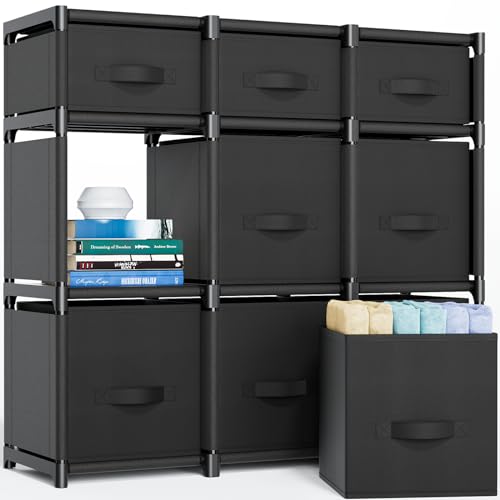
- 【With Extra Large Size】Mavivegue one-stop cube organizer has 9 individual storage drawers and also has a handle design, which allows you to take out the individual storage drawers
- 【Wide Range of Practicality】Don't you want to have a clean and comfortable environment?Mavivegue Closet Organizer and Storage Drawer can help you. It's perfect for organizing
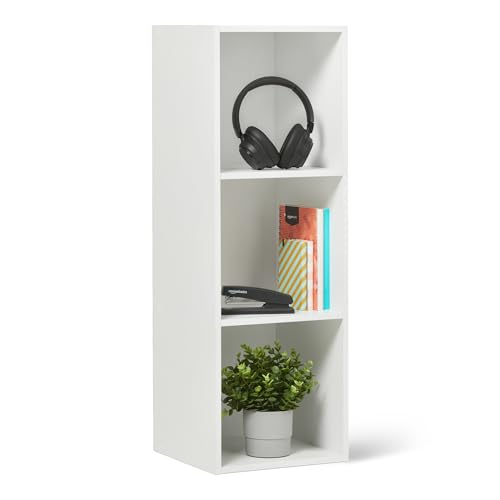
- [Versatile 3-Cube Storage] This modern white bookcase offers multiple organization possibilities for your books, photos, decorative items, and collectibles. Perfect for living
- [Sturdy & Secure Design] Engineered for stability with a fixed backing panel that prevents items from falling and keeps the unit firmly structured. Each cube boasts a reliable
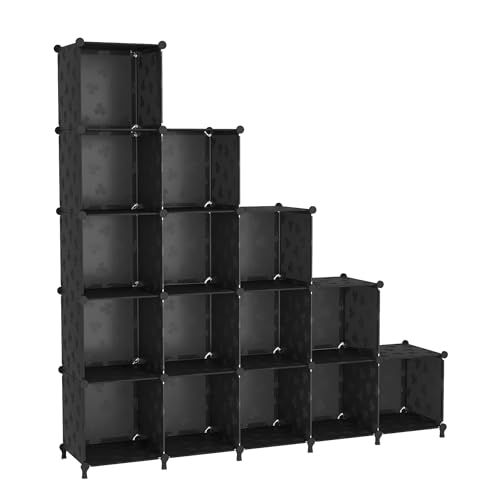
- Large Capacity: 16 Cube storage organizer includes 16 compartments (11.8"W x 11.8"H x 11.8"D each), storage for books, toys, clothes, artworks, office supplies with ease. This
- Multi-functional shelf: Open cube storage shelf is the ideal storage solution for your home! It can be used as a bookcase, cube organizer, display shelf, or shoe cabinet,it
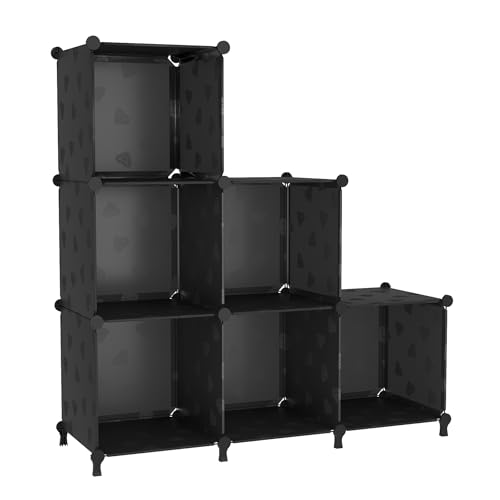
- Large Capacity: 6 Cube storage organizer includes 6 compartments (11.8"W x 11.8"H x 11.8"D each), storage for books, toys, clothes, artworks, office supplies with ease. This shelf
- Multi-functional shelf: Open cube storage shelf is the ideal storage solution for your home! It can be used as a bookcase, cube organizer, display shelf, or shoe cabinet,it
What a cube unit actually is
A cube unit is one compartment in a grid. That's it. Manufacturers sell them as 2-cube, 3-cube, 6-cube, 9-cube, and 16-cube configurations, and the count refers to openings, not shelves.
The reason people get confused: two different products share the name. A cubby system in the wood-bookcase sense is a fixed carcass — you assemble it once and the cube count never changes. A snap-together cube storage system is panels plus connectors, and you can reconfigure the same panels into a tall tower or a low sideboard. The UNKU 16 Cube Storage Organizer,Closet Organizer Storage Shelves,Black is the second type — its listing states you can arrange it vertically as a tower or horizontally as a cabinet.
Finding the right what is cube storage and how to use it comes down to matching the features to how you will actually use it.
Cubby dimensions are the number that matters most. UNKU lists 11.8" W x 11.8" H x 11.8" D per compartment. Most fabric bins sold as "cube bins" are built around roughly 11 inches so they clear the opening. That's a convention, not a rule — always check.
Step-by-step: setting up cube storage without regret
1. Measure the wall, then subtract. Measure width, height, and depth of the space. Then subtract at least 2 inches of depth for baseboard clearance if the unit sits flush to a wall. Gotcha: baseboard is the single most common reason a unit stands crooked and looks like it's leaning forward.
2. Decide open vs. bins vs. drawers before you buy. Open cubes display; bins hide clutter; drawers hide clutter and pull out so you can reach the back. Buying the frame first and figuring out the fill later is how people end up with bins that are a half-inch too wide.
3. Check the per-cube weight rating against what you're storing. Books are heavy. The Amazon Basics 3-cube unit lists a 10-pound capacity per cube; UNKU lists 11 pounds per cube. Gotcha: a single stack of hardcovers can pass 15 pounds. If you're storing a book collection, split it across more cubes rather than filling three of them solid.
4. Assemble on the floor, upright it last. Both styles go together flat. For snap-together grids, UNKU's instructions say to tap the connectors with the included small hammer after assembly so the panels lock fully. Gotcha: skipping the tap step is why some grids feel wobbly — the panels are seated but not locked.
5. Anchor anything tall to the wall. Any cube unit standing more than two cubes high near children or pets should be strapped. None of these listings state that anchoring hardware is included, so budget for a $6 anti-tip kit separately.
6. Load the heavy stuff low. Bottom row: books, tools, canned goods. Top row: linens, seasonal, light plastic. This is what keeps a lightweight snap-together tower from becoming top-heavy.
7. Label, then live with it for two weeks. Mavivegue's listing specifically suggests labeling drawers so you can find things fast. Give it two weeks before you commit to the layout — you'll almost always want to swap two cubes.
What goes wrong
Bins don't fit. Symptom: the bin binds halfway in, or sits proud of the frame by an inch. Fix: measure the opening, not the outside of the unit, and buy bins rated at least a half-inch smaller in both directions. Some frames are explicitly matched — the Amazon Basics 3-Cube Bookcase Compatible with Fabric Storage Cube Organizers, Sturdy, Easy to Assemble, White states compatibility with Amazon Basics Fabric Storage Cube Organizers, sold separately.
The unit racks side to side. Symptom: push one corner and the whole rectangle leans into a parallelogram. Fix: on wood units this is a missing or unattached back panel — the Amazon Basics unit uses a fixed backing panel specifically to keep the structure rigid. On snap-together units, re-seat every connector with the hammer.
A shelf bows in the middle. Symptom: visible sag under books after a few months. Fix: you're over the per-cube rating. Redistribute. Bowing rarely reverses.
The whole thing wants to tip forward when a drawer is open. Symptom: front feet lift. Fix: wall-anchor it, and never pull two drawers out at once on a tall configuration.
You bought too few cubes. Symptom: everything is crammed and nothing is findable. Fix: cube storage stops working past about 80% full. Snap-together systems let you add panels; fixed bookcases don't — which is the strongest argument for buying the grid style if you're unsure.
Assembly is tool-free on both UNKU units (connectors plus the included small hammer). The Amazon Basics unit ships with labeled hardware and step-by-step instructions and states no specialized tools are needed. Mavivegue describes assembly as a few simple repetitive steps with a matching installation guide.
When the fix is a new one
Mavivegue 9 Cube Storage Organizer, Closet Organizer With Drawers, Easy to Assemble DIY Shelf for Living Room, Bedroom, Dorm Room - White — hidden storage in a light finish
Nine drawers with handles, so nothing on the shelf is visible and you can pull a whole drawer to the floor rather than digging. The white finish disappears against a white wall, which matters in a small bedroom. Mavivegue 9 Cube Storage Organizer, Closet Organizer With Drawers, Easy to Assemble DIY Shelf for Living Room, Bedroom, Dorm Room - White
Mavivegue 9 Cube Storage Organizer, Closet Organizers and Storage, Cube Storage Shelf, Easy to Assemble with Storage Drawers, DIY Closet Cube Organizer for Living Room, Bedroom, Dorm Room-Black — the same nine-drawer layout in black
Same nine individual drawers and handle design, and the listing notes the configuration can be rearranged to suit your space. Black hides scuffs better in a dorm or entryway. Mavivegue 9 Cube Storage Organizer, Closet Organizers and Storage, Cube Storage Shelf, Easy to Assemble with Storage Drawers, DIY Closet Cube Organizer for Living Room, Bedroom, Dorm Room-Black
Mavivegue 6 Cube Storage Organizer, Closet Organizers and Storage, Cube Storage Shelf, Easy to Assemble with Storage Drawers, DIY Closet Cube Organizer for Living Room, Bedroom, Dorm Room-Black — a smaller drawer unit for a closet floor
Six drawers instead of nine at $26.19, and lightweight enough to move between rooms. This is the one for the bottom of a closet or beside a desk. Mavivegue 6 Cube Storage Organizer, Closet Organizers and Storage, Cube Storage Shelf, Easy to Assemble with Storage Drawers, DIY Closet Cube Organizer for Living Room, Bedroom, Dorm Room-Black
UNKU 16 Cube Storage Organizer,Closet Organizer Storage Shelves,Black — a reconfigurable grid with published cube dimensions
Sixteen 11.8-inch compartments rated 11 pounds each, built from PP panels, a metal frame, and ABS connectors. The listing states it can be arranged vertically as a tower or horizontally as a cabinet, so the same panels serve a closet or a living room wall. UNKU 16 Cube Storage Organizer,Closet Organizer Storage Shelves,Black
UNKU 6 Cube Storage Organizer, Closet Organizer Storage Shelves, Black — the same modular system at a smaller footprint
Six 11.8-inch cubes with the same 11-pound rating and tool-free connector assembly, in a diamond-patterned panel style. Good starting point if you want to test the modular approach before committing to a wall-sized grid. UNKU 6 Cube Storage Organizer, Closet Organizer Storage Shelves, Black
Amazon Basics 3-Cube Bookcase Compatible with Fabric Storage Cube Organizers, Sturdy, Easy to Assemble, White — a rigid three-cube unit for a tight wall
A fixed backing panel keeps items from falling through and holds the frame square, with 10 pounds per cube. It's explicitly designed to accept Amazon Basics fabric cube organizers, which removes the guesswork on bin sizing. Amazon Basics 3-Cube Bookcase Compatible with Fabric Storage Cube Organizers, Sturdy, Easy to Assemble, White
FAQ
Are all cube storage sizes the same? No. There is no enforced standard. UNKU publishes 11.8 inches on all three axes; other brands don't publish cube dimensions at all. Measure before buying bins, and where a listing doesn't state dimensions, check the manufacturer's Q&A section on the product page.
How much weight can a cube shelf hold? It depends on the unit and is per-cube, not per-unit. Amazon Basics states 10 pounds per cube; UNKU states 11 pounds. Treat published figures as a ceiling for evenly distributed static load, not for a solid stack of hardcovers.
Is a cubby system the same as cube storage? In practice, yes — "cubby," "cube," and "cubby storage" all describe the same square-compartment format. Retailers sometimes use "cubby" for entryway units with hooks above and "cube" for freestanding grids, but the compartment concept is identical.
Can I stack or rearrange a cube unit later? Only if it's the snap-together type. Both UNKU units are described as DIY-configurable, and the Mavivegue units are described as changeable into different forms. A screwed-together wood bookcase is fixed once assembled — check reviews on the specific listing to see how well a given unit tolerates disassembly and rebuild.
Related guides
- Best storage and organization furniture - bookshelves, storage cabinets, closet organizers, shoe racks, storage benches, pantry cabinets, cube storage, ladder shelves, coat racks, over the toilet storage with Past Challenges
- Best storage and organization furniture - bookshelves, storage cabinets, closet organizers, shoe racks, storage benches, pantry cabinets, cube storage, ladder shelves, coat racks, over the toilet storage After Recent Issues
- The Best Over-the-Toilet Storage, Compared
Key Takeaways
- Choosing the right what is cube storage and how to use it means matching the key features to your specific needs and budget
- Read real customer reviews and check the return policy before you commit
- Compare value across models — the priciest option is not always the best fit